

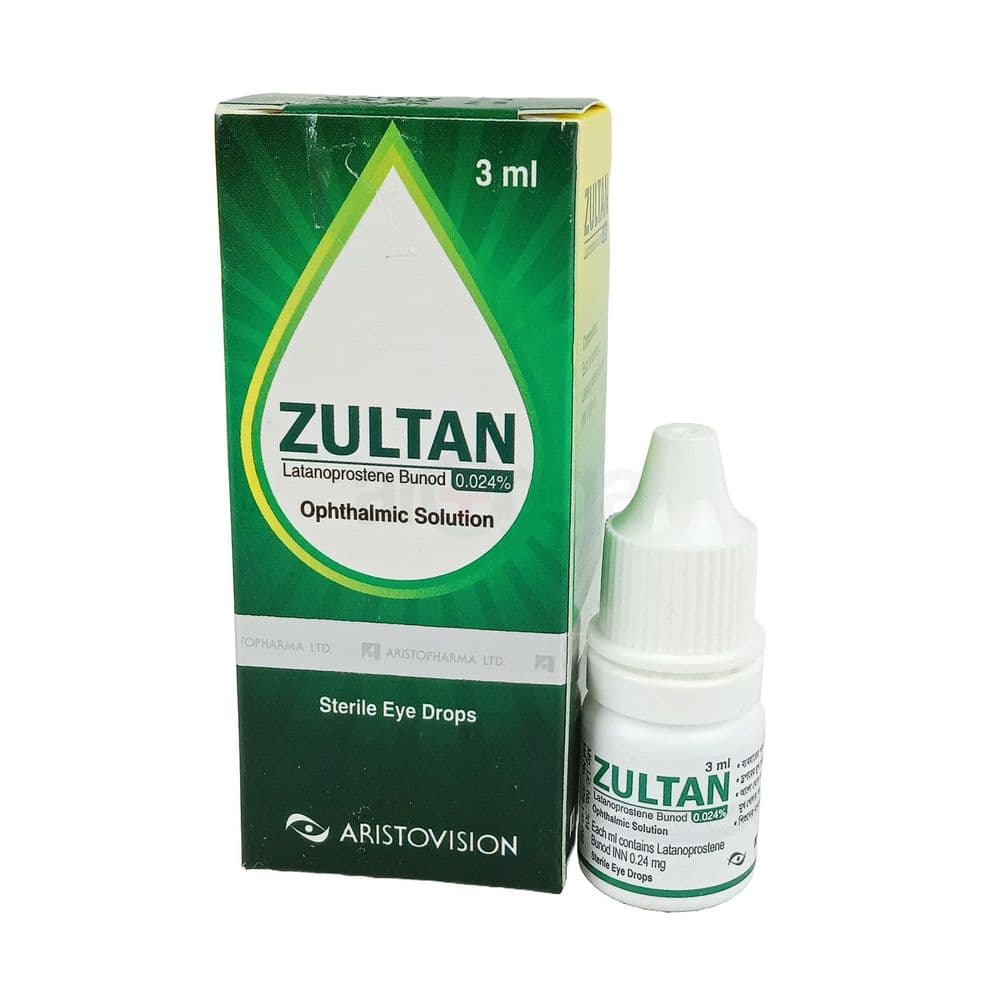
Medicine Overview of Zultan
Indication
Elevated Intraocular Pressure
Adult dose
Elevated Intraocular Pressure Indicated for reduction of intraocular pressure (IOP) in patients with open-angle glaucoma or ocular hypertension Instill 1 drop in affected eye(s) qDay in the evening
Child dose
Elevated Intraocular Pressure Indicated for reduction of intraocular pressure (IOP) in patients with open-angle glaucoma or ocular hypertension <16 years: Not recommended due to potential safety concerns related to increased pigmentation following long-term chronic use >16 years: Instill 1 drop in affected eye(s) qDay in the evening
Mode of action
Believed to lower intraocular pressure by increasing outflow of aqueous humor through the trabecular meshwork and uveoscleral routes Intraocular pressure is a major risk factor for glaucoma progression; reduction of intraocular pressure reduces risk of glaucomatous visual field loss
Precaution
Increased pigmentation to tissues may occur; most frequently reported changes with prostaglandin analogs have been of the iris and periorbital tissue (eyelid) and is expected to increase for the duration of treatment; regularly examine patients who develop noticeably increased iris pigmentation Gradual increases in length, thickness, and number of lashes have been reported Caution with a history of intraocular inflammation (iritis/uveitis); avoid if active intraocular inflammation exists, as it may exacerbate this condition Macular edema, including cystoid macular edema, reported; caution in patients with aphakia pseudophakia with a torn posterior lens capsule, or with known risk factors for macular edema Bacterial keratitis associated with the use of multiple-dose containers of topical ophthalmic products has been reported; containers may be inadvertently contaminated by patients who typically had a concurrent corneal disease or an ocular epithelial surface disruption Remove contact lenses before administration because product contains benzalkonium chloride; lenses may be reinserted 15 minutes after administration
Side effect
1-10% Hyperemia (6%) Eye irritation (4%) Eye pain (3%) Instillation site pain (2%)
Pregnancy category
Note Pregnancy There are no available human data for the use during pregnancy to inform any drug associated risks Latanoprostene bunod has caused miscarriages, abortion, and fetal harm in rabbits; when administered IV to pregnant rabbits at exposures ?0.28 times the clinical dose was shown to be abortifacient and teratogenic Doses ?20 mcg/kg/day (23 times the clinical dose) produced 100% embryofetal lethality; structural abnormalities (eg, anomalies of the great vessels and aortic arch vessels, domed head, sternebral and vertebral skeletal anomalies, limb hyperextension and malrotation, abdominal distension and edema) were observed in rabbit fetuses Latanoprostene bunod was not teratogenic rats when administered IV at 150 mcg/kg/day (87 times the clinical dose) Lactation There are no data on the presence of latanoprostene bunod in human milk, the effects on the breastfed infant, or the effects on milk production Developmental and health benefits of breastfeeding should be considered, along with the mother’s clinical need for latanoprostene bunod, and any potential adverse effects on the breastfed infant from latanoprostene bunod
Common Uses
Specifically formulated for effective treatment as prescribed by your healthcare professional.
Important Notice
Consult with a doctor before starting any new medication. Do not exceed recommended dosage.
Frequently Asked Questions (FAQ)
Help & SupportZultan
eye_drop-(0.024%)
About this item
IndicationElevated Intraocular PressureAdult doseElevated Intraocular Pressure Indicated for reduction of intraocular pressure (IOP) in patients with open-angle glaucoma or ocular hypertension Instill 1 drop in affected eye(s) qDay in the eveningChild doseElevated Intraocular Pressure Indicated for reduction of intraocular pressure (IOP) in patient...